

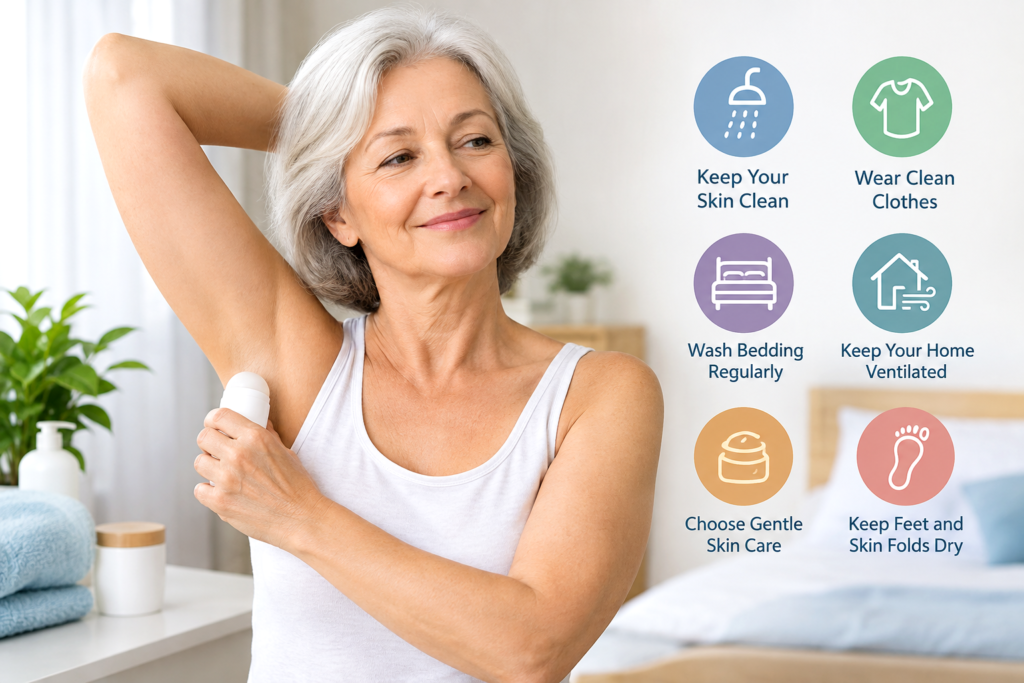
Have you ever noticed that your natural scent seems different as you get older? Perhaps your skin smells slightly musty after sleeping, or your clothes seem to retain a scent that was not noticeable years ago.
You are not alone. As people age, their skin, daily routines, and personal-care needs can change. These changes may affect how their natural body odor develops.
The expression “old person smell” is often used to describe this experience. However, it can be misleading. Growing older does not automatically mean developing an unpleasant smell, and body odor is not a reliable measure of personal hygiene.
Several factors can influence natural scent, including changes in skin oils, sweat, clothing, bedding, and the products used during daily care.
The good news is that simple habits can help you maintain a fresher, more comfortable feeling without relying on expensive products or harsh treatments.
What Does “Old Person Smell” Mean?
“Old person smell” is an informal expression, not a medical diagnosis. People use it to describe a scent they associate with older adults or with rooms, clothing, and belongings that have a particular musty smell.
Descriptions vary from person to person. Some people notice a faintly earthy or grassy scent, while others describe it as oily, dusty, or slightly stale.
There is no single smell that belongs to all older adults.
Natural body odor develops through the interaction of skin oils, sweat, microorganisms, clothing, and the surrounding environment. These factors differ widely between individuals.
For this reason, a change in scent should not automatically be viewed as a problem. Sometimes, it is simply part of the way the body changes over time.
Why Does Body Odor Change With Age?
The skin is a living organ that changes throughout life. Its moisture levels, oil production, and surface environment can all shift with age.
These changes may influence the way a person smells.
Changes in Natural Skin Oils
Your skin produces oils that help protect its surface and prevent excessive moisture loss. These oils contain different types of fats and other substances.
As people grow older, the amount and composition of skin oils may change. Some of these substances can break down over time and contribute to the natural scent of the skin.
Scientists have studied a compound called 2-nonenal, which may be produced when certain fatty acids in skin oils undergo oxidation.
Research has associated this compound with age-related changes in body odor. However, it does not explain every difference in scent, and not every older adult produces a noticeable amount of it.
The important point is simple: changes in skin chemistry may influence natural body odor, even when someone follows a regular hygiene routine.
A Different Skin Environment
The surface of your skin contains many microorganisms. They interact with sweat, oils, and other substances naturally present on the body.
This interaction contributes to the way body odor develops.
As people age, the skin environment may change. Moisture levels, skincare habits, medications, and other everyday factors can influence the microorganisms living on the skin.
These changes may affect natural scent in ways that are not always obvious.
Changes in Skin Moisture
Mature skin often becomes drier and more sensitive. It may produce less oil in some areas, while other areas may still become oily or sweaty.
Dry skin can also make people more likely to use moisturizers, body lotions, or different cleansing products.
These changes in daily skincare can affect the scent that remains on the skin.
Using a gentle cleanser and a suitable moisturizer can help maintain skin comfort while supporting a consistent personal-care routine.
Changes in Sweating
Sweat is a normal part of the body’s cooling system. On its own, fresh sweat usually has little smell.
Body odor often develops when sweat interacts with microorganisms on the skin.
Sweating patterns can change throughout life. Some older adults may sweat less than they did when they were younger, while others may experience more sweating because of their environment, activities, or personal circumstances.
Even when someone does not appear sweaty, natural skin oils and other substances can still contribute to body odor.
Changes in Daily Habits
Sometimes, the difference in scent has less to do with skin chemistry and more to do with everyday routines.
For example, someone may begin spending more time indoors, wearing heavier clothing, or using thicker bedding. These materials can absorb natural skin oils and moisture.
A person may also change their bathing routine, use different skincare products, or wash clothes and towels less frequently.
These ordinary changes can influence the smell of the body and its surroundings.
7 Simple Ways to Reduce Unwanted Body Odor
You do not need an expensive skincare routine to maintain a fresh feeling. A few practical habits can make a noticeable difference.
1. Wash Your Skin Gently
Regular bathing helps remove sweat, excess oils, dead skin cells, and substances that may contribute to body odor.
Pay attention to areas where sweat and moisture commonly collect, including:
- Underarms.
- Feet.
- Groin.
- Skin folds.
- Chest and back.
Use lukewarm water and a mild cleanser. Very hot water and strong soaps can leave mature skin dry and uncomfortable.
There is no need to scrub aggressively. Gentle, consistent cleansing is usually a better approach.
If bathing becomes difficult, simple adjustments such as a shower chair, a handheld showerhead, or a safer bathroom setup may make personal care easier.
2. Change Clothes Regularly
Clothing can absorb sweat, skin oils, and environmental odors throughout the day.
Even if your body is clean, a shirt or pair of pajamas that has been worn repeatedly may retain an unpleasant scent.
To keep clothing fresh:
- Change underwear regularly.
- Wear clean socks.
- Change clothes after heavy sweating.
- Avoid leaving damp garments in a closed laundry basket.
- Allow washed clothing to dry completely.
- Follow the washing instructions on each garment.
Natural fabrics and breathable clothing may also feel more comfortable, especially in warm weather.
A fresh change of clothes can sometimes make a bigger difference than applying more fragrance.
3. Wash Bedding and Towels Frequently
Bedding, towels, and sleepwear come into regular contact with the skin. Over time, they can collect oils, moisture, and odors.
Pillowcases, sheets, blankets, and towels should be washed according to their use and care instructions.
You can also help reduce stale smells by:
- Allowing towels to dry thoroughly.
- Avoiding damp bedding.
- Washing pajamas regularly.
- Airing out bedding when practical.
- Keeping mattresses and pillows clean according to the manufacturer’s instructions.
A clean sleeping environment can improve the overall freshness of a room.
4. Keep Your Home Well Ventilated
A closed room can hold onto odors from clothing, bedding, cooking, and everyday activities.
Good ventilation helps freshen the air and prevents smells from becoming concentrated.
When possible:
- Open windows to allow fresh air inside.
- Use suitable ventilation in bathrooms and kitchens.
- Avoid leaving damp towels in bedrooms.
- Keep worn clothing in an appropriate laundry basket.
- Allow bedding to air out when practical.
Ventilation does not change the chemistry of the skin, but it can make the surrounding environment feel cleaner and more comfortable.
5. Choose Skincare Products Carefully
Mature skin may be more sensitive to harsh cleansers and heavily fragranced products.
A simple routine can help maintain comfort:
- Choose a gentle cleanser.
- Use a moisturizer if your skin feels dry.
- Avoid very hot water.
- Choose products that suit your skin type.
- Stop using products that cause irritation.
Fragrance-free products may be useful for people with sensitive skin.
You do not need to use several different soaps or lotions to maintain good hygiene. A consistent routine is often easier to follow and kinder to the skin.
6. Use Deodorant When You Need It
Deodorant can help manage ordinary underarm odor. Some products contain ingredients that reduce odor, while others provide fragrance.
Antiperspirants serve a different purpose because they help reduce sweating.
If you choose to use one of these products, follow the instructions and select a formula that feels comfortable on your skin.
Keep in mind that deodorant may help with underarm odor, but it does not necessarily remove every natural scent associated with changes in skin oils.
If a product causes itching, redness, or burning, stop using it.
7. Keep Your Feet and Skin Folds Dry
Moisture can contribute to unpleasant smells, especially in areas where air circulation is limited.
After bathing, gently dry your feet and skin folds.
You can also:
- Change socks regularly.
- Allow shoes to dry between uses.
- Choose comfortable, breathable footwear.
- Avoid leaving damp towels against the skin.
- Keep skin folds clean and dry.
If an area becomes persistently irritated or uncomfortable, consider seeking professional advice rather than scrubbing it more forcefully.
Can Special Soaps Eliminate Age-Related Body Odor?
Many products are marketed specifically for people who want to reduce age-associated body odor.
Some soaps and cleansers contain plant-based ingredients, fragrances, or other substances designed to leave the skin feeling clean and smelling fresh.
These products may be appealing, but there is no universally proven soap that permanently eliminates age-related body odor.
A product may help remove ordinary sweat and surface oils, but it cannot necessarily prevent every natural change in skin chemistry.
When choosing a cleanser, focus on:
- Gentle ingredients.
- Skin comfort.
- Clear instructions.
- Reasonable product claims.
- Suitability for your skin type.
Be cautious of products that promise guaranteed or permanent results.
Good personal care does not require expensive treatments. A simple routine that you can maintain comfortably is often the most practical choice.
Can Diet Affect the Way You Smell?
The foods you eat can sometimes influence body odor.
Certain strongly flavored foods may affect the smell of sweat or breath. Individual responses vary, and not everyone notices the same changes.
However, there is no established diet that guarantees prevention of age-associated body odor.
You do not need to avoid particular foods simply because you are getting older.
Instead, pay attention to your own experience. If you notice that a particular food consistently changes your scent, you can consider making reasonable adjustments to your eating habits.
A varied, balanced diet supports general well-being and is a sensible foundation for healthy skin.
Why Do Some Smells Become More Noticeable Indoors?
The environment around you can influence how you perceive body odor.
A warm, poorly ventilated room may hold onto smells from clothing, bedding, furniture, and skin oils. This can make a scent more noticeable than it would be outdoors.
Humidity can also affect how quickly fabrics dry and how long certain odors remain in a room.
If you notice a persistent smell in your bedroom, try washing bedding, airing out the room, and checking whether clothing or towels are retaining moisture.
Sometimes, improving the environment is all that is needed to make a space feel fresher.
Common Mistakes to Avoid
When people notice a change in their natural scent, they sometimes try to solve the problem by using stronger products.
That approach is not always helpful.
Scrubbing Too Hard
Aggressive scrubbing can irritate the skin and make it feel dry or uncomfortable.
A gentle cleanser and regular washing are usually more appropriate than rough exfoliation.
Using Too Much Fragrance
Perfume and scented lotions can temporarily mask body odor, but they do not necessarily remove the source.
Heavy fragrance may also irritate sensitive skin.
Choose products carefully and avoid applying several strongly scented products at once.
Taking Repeated Hot Showers
Hot water can remove some of the skin’s natural protective oils. Frequent hot showers may leave mature skin feeling dry.
Lukewarm water and gentle cleansing are often more comfortable.
Buying Products With Unrealistic Promises
Be careful with products that claim to permanently reverse natural age-related changes in body odor.
No single soap, lotion, or supplement has been proven to work for everyone.
A practical routine is usually more useful than chasing a guaranteed solution.
A Simple Daily Routine for a Fresher Feeling
A consistent routine can help you feel comfortable and confident.
Morning
Start the day with a shower or gentle wash, depending on your needs and skin type.
Clean areas that tend to sweat, dry your skin carefully, and apply moisturizer if necessary. Put on clean clothes and socks.
If you use deodorant, apply it according to the product’s instructions.
During the Day
Change damp clothing when needed.
Keep your living space comfortable and ventilated, and avoid leaving wet towels or worn clothes in closed areas.
If you spend time outdoors, remember that heat and physical activity may increase sweating.
Evening
Change out of clothing that has absorbed sweat or environmental odors.
Wash your skin as needed, dry it gently, and prepare clean sleepwear.
Make sure towels and bedding remain dry and comfortable.
You do not have to follow a strict schedule. The best routine is one that fits your lifestyle and protects your skin.
Frequently Asked Questions
Does everyone develop “old person smell”?
No. People have different natural body odors, and aging does not automatically produce an unpleasant scent.
Changes in skin oils, daily routines, and the surrounding environment may influence odor, but the experience varies from person to person.
Does this smell mean someone has poor hygiene?
Not necessarily.
A person can maintain excellent hygiene and still notice changes in their natural scent over time.
Body odor is influenced by many factors, not just bathing habits.
Can regular bathing help?
Yes. Regular, gentle cleansing can remove sweat, excess oils, and other substances from the skin.
However, bathing cannot necessarily prevent every natural change associated with skin chemistry.
Is 2-nonenal responsible for every age-related smell?
No. Researchers have associated 2-nonenal with certain age-related changes in body odor, but it is not the only possible contributor.
Skin oils, microorganisms, clothing, and environmental conditions may also influence scent.
Should I use a special soap?
You can choose a soap that feels comfortable and suits your skin.
However, no special soap has been proven to permanently eliminate age-associated body odor in everyone.
A mild cleanser and regular personal care are reasonable starting points.
Can changing clothes help?
Yes. Clothing and bedding can retain sweat, skin oils, and other odors.
Regular washing and proper drying may help your surroundings feel fresher.
Why does my bedroom sometimes smell different in the morning?
Bedding, sleepwear, moisture, and limited air circulation can contribute to a stale scent.
Washing bedding regularly, allowing fabrics to dry, and improving ventilation may help.
Is body odor a normal part of getting older?
Changes in body odor can occur with age, but they are not inevitable.
Aging affects people differently, and many older adults do not notice a significant change in their natural scent.
A Fresh Approach to Body Odor and Aging
Changes in body odor can be a normal part of getting older, but they do not define your health, cleanliness, or appearance.
Your skin changes over time. Your daily habits may change, too. Together, these factors can influence the way you smell.
The most useful approach is simple: care for your skin gently, wear clean clothing, wash bedding regularly, and keep your living space comfortable and ventilated.
You do not need to fight every natural change that comes with age.
A practical personal-care routine, combined with realistic expectations, can help you feel fresh and comfortable at every stage of life.
This article is intended for general educational purposes and does not replace personalized professional advice.